|
|
||
|
|||
May 22-28, National Hurricane Preparedness Week |
| By Ex Chief Bill Renzetti | |
| May 23, 2011 | |
| This week marks National Hurricane Preparedness Week. The Atlantic basin is expected to see an above-normal hurricane season this year, according to the seasonal outlook issued by NOAA's Climate Prediction Center – a division of the National Weather Service. Across the entire Atlantic Basin for the six-month season, which begins June 1, NOAA is predicting the following ranges this year: • 12 to 18 named storms (winds of 39 mph or higher), of which:
Hurricane Landfalls: It only takes one storm hitting our area to cause a disaster, regardless of the overall activity predicted in the seasonal outlook. Therefore, residents, businesses, and government agencies of coastal and near-coastal regions are urged to prepare every hurricane season regardless of this, or any other, seasonal outlook. Understanding the Terminology A tropical cyclone is a rotating, organized system of clouds and thunderstorms that originates over tropical or subtropical waters and has a closed low-level circulation. Tropical cyclones rotate counterclockwise in the Northern Hemisphere. They are classified as follows: Tropical Depression — A tropical cyclone with maximum sustained winds of 38 mph (33 knots) or less Tropical Storm — A tropical cyclone with maximum sustained winds of 39 to 73 mph (34 to 63 knots) Hurricane — A tropical cyclone with maximum sustained winds of 74 mph (64 knots) or higher. In the western North Pacific, hurricanes are called typhoons; similar storms in the Indian Ocean
Major Hurricane—A tropical cyclone with maximum sustained winds of 111 mph (96 knots) or
Now is the time, if you haven't already, to get your plan together for what you and your family would do if disaster strikes. Here's what you can do to prepare for such an emergency.
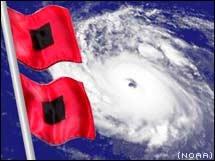
• WATCH: Hurricane conditions are possible in the specified area of the WATCH, usually within 36 hours. • WARNING: Hurricane conditions are expected in the specified area of the WARNING, usually within 24 hours. Prepare a Personal Evacuation Plan • Identify ahead of time where you could go if you are told to evacuate. Choose several places--a friend's home in another town, a motel, or a shelter.
Take these items with you when evacuating: • Prescription medications and medical supplies;
Assemble a Disaster Supplies Kit Including the Following Items: • First aid kit and essential medications.
Prepare for High Winds • Install hurricane shutters or purchase precut 1/2" outdoor plywood boards for each window of your home. Install anchors for the plywood and predrill holes in the plywood so that you can put it up quickly.
Know What to Do When a Hurricane WATCH Is Issued • Listen to NOAA Weather Radio or local radio or TV stations for up-to-date storm information.
Know What to Do When a Hurricane WARNING Is Issued • Listen to the advice of local officials, and leave if they tell you to do so.
Know What to Do After a Hurricane Is Over: • Keep listening to NOAA Weather Radio or local radio or TV stations for instructions.
For more information on preparing for the huuricane season please click the following links. NATIONAL HURRICANE CENTER:
NATIONAL HURRICANE CENTER 2011 HURRICANE PREPAREDNESS PSA:
|
|
|
|
||
|
|||