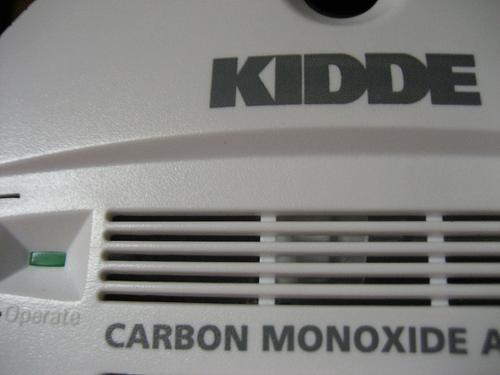
| Governor David A. Paterson today announced that Amanda's Law, signed into law in August 2009, takes effect today. Amanda's Law mandates the installation of carbon monoxide (CO) detectors in all homes in New York State. The law is named for 16-year-old Amanda Hansen of West Seneca, New York, who died on January 17, 2009, due to a carbon monoxide leak from a defective boiler while she was sleeping at a friend's house.
"Today acts as important reminder for all New Yorkers to check that their smoke detectors and carbon monoxide detectors are installed properly and are in good working order," Governor Paterson said. "Ensuring the safety of New York's families is a responsibility I hold most dear, and this law will do its part to help prevent future tragedies involving carbon monoxide poisoning."
Under Amanda's Law, homes built before January 1, 2008, are permitted to have battery-powered CO alarms, while homes built after this date are required to have the alarms hard-wired into the building. Previously, only homes built or bought after July 30, 2002 were required to have these devices installed. Additionally, Amanda's Law will require contractors in New York State to install a CO alarm when replacing a hot water tank or furnace if the home is not equipped with an alarm.
State Fire Administrator Floyd Madison said: "Governor Paterson signed Amanda's Law to ensure that no needless tragedies happen for lack of a CO alarm. It's very simple: carbon monoxide detectors and smoke detectors save lives. CO poisoning is the number one cause of poisoning deaths in the United States, and the Office of Fire Prevention and Control looks forward to working with local fire departments and code enforcement officers to ensure that New Yorkers have working alarms installed in their homes."
Additionally, Amanda's law requires existing one- and two-family residences to have at least one carbon monoxide alarm installed on the lowest floor of the building having a sleeping area. The alarm must be clearly audible in all sleeping areas over background noise levels with all intervening doors closed.
Carbon monoxide can be produced when burning any type of fuel including gasoline, charcoal, propane, natural gas, kerosene, oil, wood or coal. If any flammable material burns incompletely, carbon monoxide is produced. Carbon monoxide can kill in minutes or hours depending on the levels in the air.
When carbon monoxide is inhaled at damaging levels it can lead to breathing difficulties, impaired judgment and memory, damage to the nervous system, cardiac trauma, brain damage, coma and death. Everyone is susceptible, but the American Medical Association says that unborn and young children, pregnant women, senior citizens and people with heart or respiratory problems are especially vulnerable and are at the highest risk for death or serious injury.
The symptoms of carbon monoxide poisoning are often mistaken for the flu and can include dizziness, fatigue, weakness, throbbing headache, nausea, vomiting, irregular breathing, sleepiness and confusion. By the time people realize there is a problem, they are often too sick or too disoriented to get out of the house and get help.
According to the New York State Office of Fire Prevention and Control (OFPC), fire departments in New York responded to more than 42,000 calls involving carbon monoxide in 2007, the most recent year with complete data. A majority of these calls came in at night time hours and during the winter months.
In addition to installing carbon monoxide alarms, Governor Paterson and the OFPC remind homeowners to take the following actions to help reduce their risk and stay safe:
• Test and/or replace alarms according to the manufacturer's instructions;
• Have heating systems, vents, chimneys and flues tested, inspected and cleaned by a qualified technician each year;
• Never leave a car running in an attached garage;
• Regularly examine vents and chimneys for improper connections, rust, soot or other debris;
• Never run a vehicle, generator or other fuel powered motor indoors, even if garage doors are open to the outdoors;
• Never use a gas oven to heat a home, and only use barbecue grills outdoors – never in a house or garage; and
• Remember that carbon monoxide alarms are not substitutes for smoke alarms. Smoke alarms should also be installed on every level of a home as well as in or outside all sleeping areas.
For more information, please visit: http://www.dos.state.ny.us/fire/COtoolkit.htm
CMFD News Story - Exposing an Invisible Killer: The Dangers of Carbon Monoxide http://www.centermorichesfd.com/index.cfm?fs=news.newsView&News_ID=30 |