| This week marks National Hurricane Preparedness Week. The Atlantic basin is expected to see an above-normal hurricane season this year, according to the seasonal outlook issued by NOAA's Climate Prediction Center – a division of the National Weather Service.
Across the entire Atlantic Basin for the six-month season, which begins June 1, NOAA is predicting the following ranges this year:
• 12 to 18 named storms (winds of 39 mph or higher), of which:
• 6 to 10 could become hurricanes (winds of 74 mph or higher), including:
• 3 to 6 major hurricanes (Category 3, 4 or 5; winds of 111 mph or higher)
Hurricane Landfalls:
It only takes one storm hitting our area to cause a disaster, regardless of the overall activity predicted in the seasonal outlook. Therefore, residents, businesses, and government agencies of coastal and near-coastal regions are urged to prepare every hurricane season regardless of this, or any other, seasonal outlook.
Understanding the Terminology
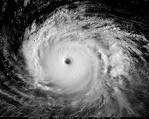
A tropical cyclone is a rotating, organized system of clouds and thunderstorms that originates over tropical or subtropical waters and has a closed low-level circulation. Tropical cyclones rotate counterclockwise in the Northern Hemisphere. They are classified as follows:
Tropical Depression — A tropical cyclone with maximum sustained winds of 38 mph (33 knots) or less
Tropical Storm — A tropical cyclone with maximum sustained winds of 39 to 73 mph (34 to 63 knots)
Hurricane — A tropical cyclone with maximum sustained winds of 74 mph (64 knots) or higher.
In the western North Pacific, hurricanes are called typhoons; similar storms in the Indian Ocean
and South Pacific Ocean are called cyclones.
Major Hurricane—A tropical cyclone with maximum sustained winds of 111 mph (96 knots) or
higher, corresponding to a Category 3, 4 or 5 on the Saffir-Simpson Hurricane Wind Scale.
Now is the time, if you haven't already, to get your plan together for what you and your family would do if disaster strikes.
Here's what you can do to prepare for such an emergency.
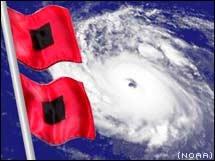
Know What Hurricane WATCH and WARNING Mean
• WATCH: Hurricane conditions are possible in the specified area of the WATCH, usually within 36 hours.
• WARNING: Hurricane conditions are expected in the specified area of the WARNING, usually within 24 hours.
Prepare a Personal Evacuation Plan
• Identify ahead of time where you could go if you are told to evacuate. Choose several places--a friend's home in another town, a motel, or a shelter.
• Keep handy the telephone numbers of these places as well as a road map of your locality. You may need to take alternative or unfamiliar routes if major roads are closed or clogged.
• Listen to NOAA Weather Radio or local radio or TV stations for evacuation instructions. If advised to evacuate, do so immediately.
Take these items with you when evacuating:
• Prescription medications and medical supplies;
• Bedding and clothing, including sleeping bags and pillows
• Bottled water, battery-operated radio and extra batteries, first aid kit, flashlight
• Car keys and maps
• Documents, including driver's license, Social Security card, proof of residence, insurance policies, wills, deeds, birth and marriage certificates, tax records, etc.
Assemble a Disaster Supplies Kit Including the Following Items:
• First aid kit and essential medications.
• Canned food and can opener.
• At least three gallons of water per person.
• Protective clothing, rainwear, and bedding or sleeping bags.
• Battery-powered radio, flashlight, and extra batteries.
• Special items for infants, elderly, or disabled family members.
• Written instructions on how to turn off electricity, gas and water if authorities advise you to do so. (Remember, you'll need a professional to turn them back on.)
Prepare for High Winds
• Install hurricane shutters or purchase precut 1/2" outdoor plywood boards for each window of your home. Install anchors for the plywood and predrill holes in the plywood so that you can put it up quickly.
• Make trees more wind resistant by removing diseased and damaged limbs, then strategically removing branches so that wind can blow through.
Know What to Do When a Hurricane WATCH Is Issued
• Listen to NOAA Weather Radio or local radio or TV stations for up-to-date storm information.
• Prepare to bring inside any lawn furniture, outdoor decorations or ornaments, trash cans, hanging plants, and anything else that can be picked up by the wind.
• Prepare to cover all windows of your home. If shutters have not been installed, use precut plywood as described above. Note: Tape does not prevent windows from breaking, so taping windows is not recommended.
• Fill your car's gas tank.
• Recheck manufactured home tie-downs.
• Check batteries and stock up on canned food, first aid supplies, drinking water, and medications.
Know What to Do When a Hurricane WARNING Is Issued
• Listen to the advice of local officials, and leave if they tell you to do so.
• Complete preparation activities.
• If you are not advised to evacuate, stay indoors, away from windows.
• Be aware that the calm "eye" is deceptive; the storm is not over. The worst part of the storm will happen once the eye passes over and the winds blow from the opposite direction. Trees, shrubs, buildings, and other objects damaged by the first winds can be broken or destroyed by the second winds.
• Be alert for tornadoes. Tornadoes can happen during a hurricane and after it passes over. Remain indoors, in the center of your home, in a closet or bathroom without windows.
• Stay away from flood waters. If you come upon a flooded road, turn around and go another way. If you are caught on a flooded road and waters are rising rapidly around you, get out of the car and climb to higher ground.
Know What to Do After a Hurricane Is Over:
• Keep listening to NOAA Weather Radio or local radio or TV stations for instructions.
• If you evacuated, return home when local officials tell you it is safe to do so.
• Inspect your home for damage.
• Use flashlights in the dark; do not use candles.
• Power Outage Safety
• Food Safety
• Chainsaw Safety
• Portable Generator Safety
• Water treatment:
For more information on preparing for the huuricane season please click the following links.
NATIONAL HURRICANE CENTER:
http://www.nhc.noaa.gov/outreach/prepared_week.shtml
NATIONAL HURRICANE CENTER 2011 HURRICANE PREPAREDNESS PSA:
http://www.youtube.com/watch?v=R0-w84UUPts&list=PL3700A9D3E15D6C73 |